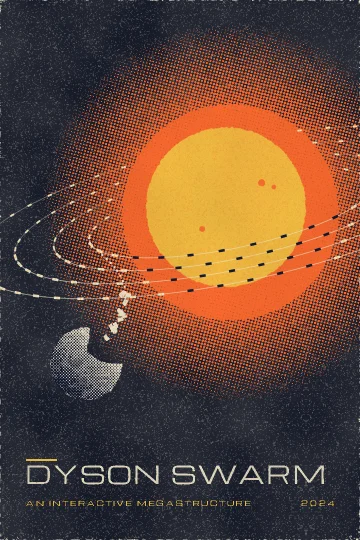
01The Swarm · Mercury · 0.39 AU · sunlight 3 min
The Swarm
Take Mercury apart and put its matter in orbit around the Sun.
Open the Swarm
01The Swarm · Mercury · 0.39 AU · sunlight 3 min
Take Mercury apart and put its matter in orbit around the Sun.
Open the Swarm
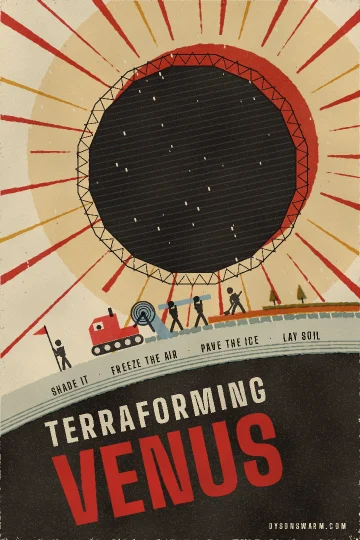
02Venus · 0.72 AU · sunlight 6 min
Shade Venus until its air snows out, pave over the ice, then lay soil on top.
Open Terraforming Venus
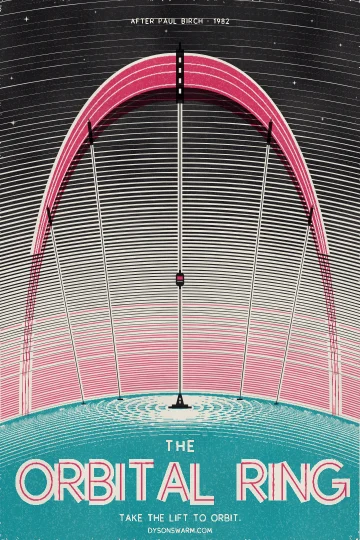
03Earth · 1 AU · sunlight 8 min
Ride a cable from the Pacific off San Francisco up to a ring 300 km above the Earth.
Open The Orbital Ring
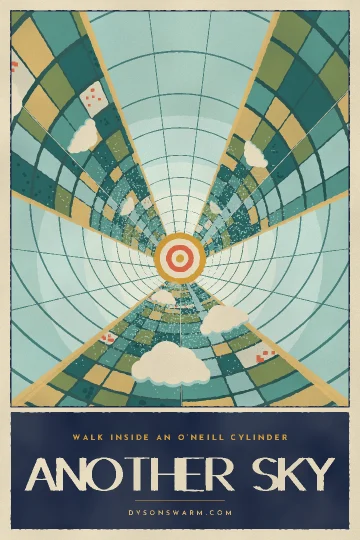
04Near Earth · 1 AU · sunlight 8 min
Walk the shore inside an O’Neill cylinder, or fly up to the land overhead.
Open Another SkyOut past Mars, the asteroid belt, Jupiter, Saturn and Uranus. Sunlight takes four hours to get to Neptune.

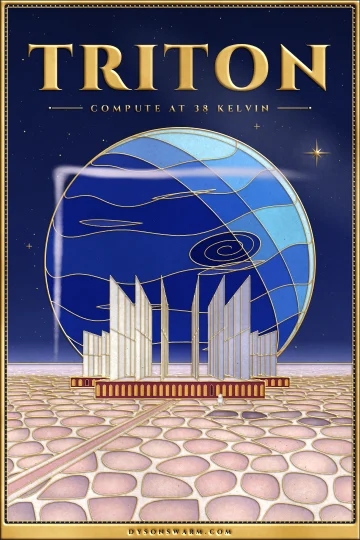
05Triton · Neptune · 30 AU · sunlight 4 h
A moon grown into a computer, from 2050 to 2090, powered by fusion.
Open Triton
Most talk about the future looks ten or twenty years ahead. I’m deliberately looking further: the 2050s and on, past the singularity, when we start building megastructures in space. Very few people think about space, AI and the singularity together. These places are where I do.
Space futurism and AI futurism, together.